Many people want to become a CEO. The title sounds powerful. Big office. Decisions money. Movies show strong leaders running huge companies.
Real life is different.
A CEO works under pressure. Every day. Investors want results. Employees watch close. One bad decision can hurt the whole company.
Still people chase the role. Some rise inside companies. Some start their own business. The path can be different.
How to Become a CEO
The path to CEO is rarely straight.
Careers change. Industries change. Opportunities appear without warning. Many CEOs started with normal jobs. Interns. Assistants. Junior staff.
Time passes. Skills grow. Experience builds.
One promotion comes. Then another. More work. Bigger teams.
Then one day the board makes a decision.
New CEO.
What Does a CEO Actually Do
Many people think a CEO only gives orders.
That is not true.
A CEO spends time in meetings. They read reports. Study numbers. Talk with leaders.
Their main job is simple.
Choose the direction of the company.
Think about a large ship at sea. Many people work on it.
One captain chooses the direction.
That captain is the CEO.
Core Responsibilities of a Chief Executive Officer
The CEO holds the final responsibility for the company.
If the company grows people praise the leader. If the company loses money people blame the leader.
Common responsibilities include:
Set company vision
Plan long term strategy
Hire senior leaders
Approve big financial decisions
Speak with investors
Represent the company in public
Each decision affects workers. Customers. Investors.
Daily Tasks Most People Never Notice
People see CEOs on stage or in interviews.
Most of the job is quiet work.
A normal day includes reading reports. Meeting leaders. Checking company performance. Solving problems.
Some days feel normal.
Other days feel messy.
One problem can take the whole week.
Good leaders adjust quick.
Skills Every Successful CEO Uses
Knowledge helps early in a career.
Leadership skills matter more later.
Successful CEOs use many skills.
Important skills include:
Strategic thinking
Clear communication
Financial knowledge
Problem solving
Fast decision making
These skills grow with time.
Real work teaches more than school.
Education Requirements for Becoming a CEO
Education helps at the start.
Many CEOs finish university. Some study business. Others study engineering or economics.
Education teaches how to think and solve problems.
It also helps people meet useful contacts.
But education alone does not make a CEO.
Experience matters more.
Do You Need a Degree to Become a CEO
Technical you do not need one.
Some entrepreneurs built large companies without college.
But that is rare.
Most big companies choose leaders with strong education.
A degree shows discipline and knowledge.
Still the most important skill is leadership.
Degrees That Often Lead Toward the CEO Role
Some degrees appear often among CEOs.
Business administration is common. It teaches management and planning.
Finance helps people understand money.
Economics explains how markets work.
Engineering also appears often. Engineers learn how to solve complex problems.
Many technology companies like leaders with technical knowledge.
The Role of an MBA in the CEO Journey
Some professionals earn an MBA later in their career.
Business schools study real companies. Students discuss strategy and leadership.
They also build strong networks.
An MBA can help.
But it does not guarantee success.
Many CEOs never studied business at that level.
They learned through work. Heated Jackets
Essential Skills You Must Develop to Become a CEO
Skills grow slow.
Projects teach lessons. Failures teach even more.
Every challenge builds experience.
Leadership grows step by step.
Leadership Skills CEOs Must Master
Leaders must build trust.
Employees follow leaders who speak clear and act with confidence.
Good leaders guide teams through hard times.
They also celebrate success.
Small actions shape company culture.
Strategic Thinking and Vision
CEOs think about the future.
Markets change fast. Technology changes industries.
Leaders ask hard questions.
Imagine a CEO late at night in the office. Quiet room. Reports on the desk.
The company looks strong today.
But the future can change quick.
Strategy helps leaders prepare.
Without strategy a company can lose direction.
Financial Intelligence for CEOs
Money drives business.
Revenue shows growth. Costs show efficiency. Cash flow shows stability.
CEOs check numbers often.
They decide where money goes.
Hiring. Expansion. New projects.
One bad money decision can hurt a company.
Communication and Influence
Clear communication is very important.
CEOs talk with workers. Investors. Partners.
Each group needs clear information.
Good leaders also listen carefull.
Listening helps leaders make better decisions.
The Typical Career Path to Becoming a CEO
Most careers start with simple roles.
People learn how companies work.
They see how decisions affect results.
Mistakes also teach important lessons.
Starting Roles That Often Lead Toward CEO Positions
Common early roles include:
Business analyst
Marketing assistant
Financial analyst
Operations coordinator
Product assistant
These jobs show how businesses operate.
Curious people learn the most.
Moving Into Management and Leadership
After some years strong workers move into management.
They lead teams. Handle budgets. Solve problems.
Examples include:
Project manager
Department supervisor
Team leader Operations manager
Leadership skills grow here.
Executive Roles Before Becoming a CEO
Senior leaders manage large parts of a company.
Common executive roles include:
Chief Operating Officer
Financial Officer
Marketing Officer
Vice President
These leaders handle large teams and big budgets.
Boards watch their performance close.
How Long It Takes to Become a CEO
Becoming a CEO takes time.
Most leaders work many years before reaching the top.
Early years focus on learning.
Later years focus on strategy and leadership.
Some startups move faster.
Large companies move slower.
Factors That Can Speed Up the Journey
Some actions help people move faster.
Strong results matter most.
Other helpful factors include:
Work in fast growing companies
Accept hard projects
Build strong professional relationships
Learn new skills quick
Preparation creates opportunity.
Different Ways to Become a CEO
There is more than one path.
Some people rise inside companies.
Others start businesses.
Some move between companies as executives.
Each path can lead to the top.
Networking Strategies That Help You Become a CEO
Relationships help careers grow.
Connections create opportunities.
Networking takes time and patience.
Building Relationships With Industry Leaders
Future leaders often meet at events. Conferences. Industry meetings.
Simple conversations can lead to strong relationships.
Trust grows slow.
Respect matters.
Mentorship and Executive Guidance
Mentors share advice from experience.
They warn about mistakes.
They introduce young professionals to important people.
Many CEOs say mentors helped their career.
Personal Reputation and Visibility
Leaders must build a strong reputation.
Speaking at events helps. Sharing ideas helps too.
People notice leaders who think clear.
A good reputation brings new opportunities.
Habits and Mindsets of High Successful CEOs
Daily habits shape success.
Many CEOs follow strong routines.
Small actions each day create big results.
How CEOs Think About Business
CEOs focus on the big picture.
They watch trends. Study competitors. Think about risks.
They stay curious.
They keep asking questions.
Daily Habits That Support Leadership
Common habits include
Reading industry news
Planning daily priorities
Checking company performance
Thinking about long term goals
Consistency helps leaders stay focused.
Emotional Intelligence in Leadership
People drive every company.
Employees react to leadership style.
Emotional intelligence helps leaders understand others.
Important traits include:
Self awareness
Empathy
Patience
Conflict
resolution
Leaders who understand people build better teams.
Common Mistakes That Prevent People From Becoming CEOs
Some mistakes slow career growth.
Learning them early helps people avoid them.
Overvaluing Technical Skills
Technical skills help early in a career.
Leadership roles must broader abilities.
People skills and strategy matter more later.
Avoiding Responsibility
Some workers avoid hard decisions.
Leaders cannot do that.
They must act even when the situation feels uncertain.
Weak Professional Networks
Talented people sometimes stay unnoticed.
Without strong networks leaders may miss opportunities.
Connections help careers grow.
Real Examples of People Who Became CEOs
Mary Barra started as an intern in an automobile company.
She worked many years in different roles. Manufacturing. Engineering. Management.
Later she became CEO of General Motors.
Jeff Bezos followed a different path.
He left a finance job and started a small online bookstore.
That business later became Amazon.
Different journeys. Same result.
Salary and Benefits of Being a CEO
CEO pay depends on company size.
Large companies offer high salaries.
They also offer bonuses and company shares.
If the company grows those shares increase in value.
That is why CEOs can earn very high income.
But the job also brings heavy pressure.
Every decision affects money and people.
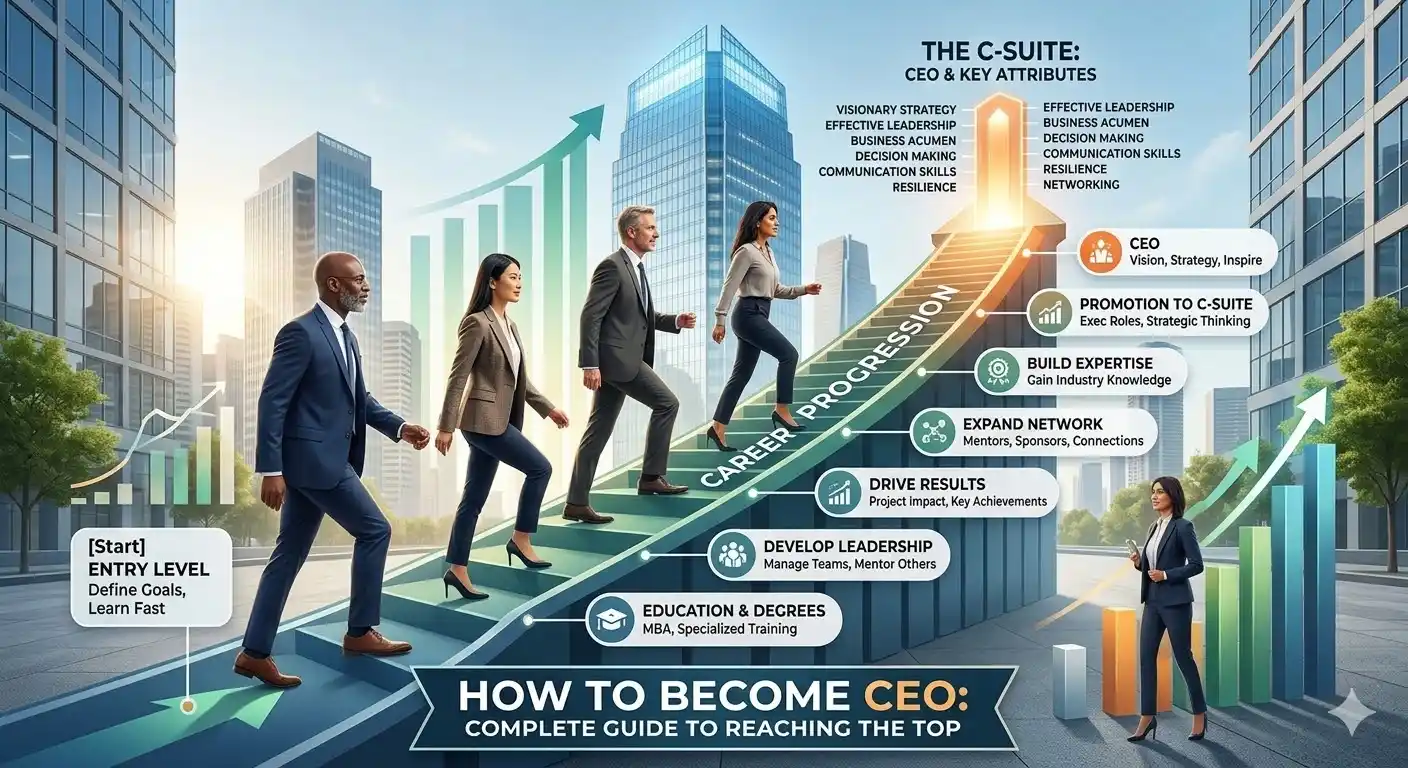
Step by Step Guide on How to Become a CEO
The path takes patience.
Common steps include:
Build strong education. Gain work experience. Move into leadership roles. Learn strategy. Deliver strong results.
Each step builds trust.
Over time trust becomes authority.
Is Becoming a CEO Right for You
Many people want leadership roles.
But the job demands sacrifice.
Long work hours. Hard decisions. Public attention.
Some people enjoy that challenge.
Others prefer different careers.
Ask yourself simple questions.
Do you enjoy leading people.
Can you make hard decisions quick.
Conclusion
Becoming a CEO takes time and effort.
Leadership skills grow through experience.
Strategic thinking develops after years of learning.
Some people rise inside companies.
Others build businesses themselves.
The path may look different for everyone.
One rule stays clear.
Learn early. Accept responsibility. Build strong relationships.