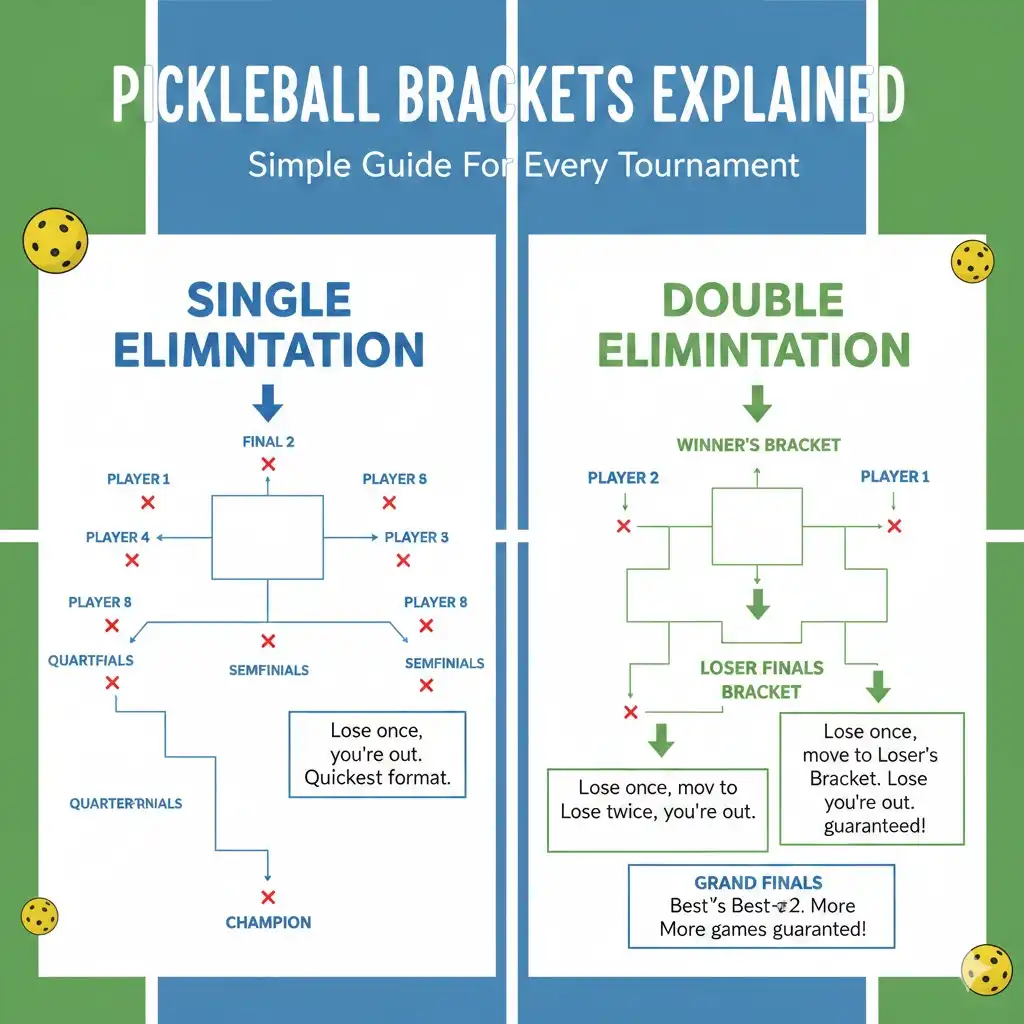
Pickleball Brackets Simple Complete Guide Everyone
Pickleball is fast. It’s fun. And tournaments make it even better. But, without the right pickleball brackets, things fall apart fast.
Games get delayed. Players feel confused. Fair play disappears.
This guide fixes all that.
You’ll learn what pickleball brackets are, how they work, and how to choose the right one. You’ll also see real examples, common mistakes, and smart tips you can use today.
No jargon. No confusion. clear answers that make sense.
Let’s jump in.
What Are Pickleball Brackets?
Pickleball brackets are systems that organize players or teams in a tournament.
They decide:
- Who plays who
- When matches happen
- How winners move forward
Think of brackets like a roadmap. They guide every match from start to finish.
Without brackets, tournaments feel messy and unfair.
Why Pickleball Brackets Matter So Much
Good brackets do more than save time. They protect the spirit of the game.
Here’s why pickleball brackets matter:
- They keep matches fair
- They balance skill levels
- They reduce wait times
- They help players track progress
- They make tournaments feel professional
In short, brackets turn chaos into calm.
Common Types of Pickleball Brackets
Not all pickleball brackets work the same way. Each type fits a different goal.
Let’s break them down simple.
Single Elimination Pickleball Brackets
This is the most basic format.
Lose once, and you’re out.
How it works:
- Players start in pairs
- Winners move forward
- Losers leave the tournament
Best for:
- Short events
- Large groups
- Quick results
Pros:
- Easy to run
- Fast schedule
- Less court time
Cons:
- One bad game ends your run
- Less play time for players
Single elimination pickleball brackets work best for casual or charity events.
Double Elimination Pickleball Brackets
This format gives players a second chance.
You must lose twice to be out.
How it works:
- Winners bracket
- Losers bracket
- Final match decides the champion
Best for:
- Competitive players
- Club tournaments
- Fair outcomes
Pros:
- More matches
- Fairer results
- Less pressure early
Cons:
- Longer schedule
- More complex setup
Double elimination pickleball brackets reward consistency and skill.
Round Robin Pickleball Brackets
Everyone plays everyone.
No early exits here.
How it works:
- Each team plays all others
- Wins earn points
- Top teams advance
Best for:
- Small groups
- Skill-level play
- Social events
Pros:
- Greatest play time
- Great for learning
- Very fair
Cons:
- Takes more time
- Needs good scheduling
Round robin pickleball brackets are perfect for beginners and leagues.
Pool Play Pickleball Brackets
This is a hybrid format.
It mixes round robin with elimination.
How it works:
- Players split into pools
- Pool winners advance
- Final rounds use elimination
Best for:
- Medium to large events
- Skill-based tournaments
Pros:
- Balanced competition
- More games for everyone
- Clear rankings
Cons:
- Planning takes effort
- Requires clear rules
Pool play pickleball brackets feel modern and fair.
Ladder Style Pickleball Brackets
This format ranks players over time.
Movement happens weekly or daily.
How it works:
- Players challenge those above them
- Winners move up
- Losers move down
Best for:
- Clubs
- Ongoing leagues
Pros:
- Encourages improvement
- Flexible scheduling
- Great motivation
Cons:
- Not ideal for one-day events
Ladder pickleball brackets build long-term excitement.
How to Choose the Right Pickleball Brackets
Picking the right format matters.
Ask these questions first:
- How many players are joining?
- How much time do you have?
- Is this casual or competitive?
- How many courts are available?
Quick guide:
- Few players → Round robin
- Many players → Single elimination
- Competitive play → Double elimination
- Skill balance → Pool play
The right pickleball brackets keep everyone happy.
Pickleball Brackets for Singles vs Doubles
Singles and doubles need different planning.
Singles brackets:
- Shorter games
- Faster movement
- More physical demand
Doubles brackets:
- Longer rallies
- More strategy
- Team coordination
Always separate singles and doubles pickleball brackets to avoid confusion.
Skill-Based Pickleball Brackets Explained
Skill levels protect fairness.
Most tournaments use ratings like:
- Beginner
- Intermediate
- Advanced
- Open
Some use numeric ratings like 3.0, 3.5, or 4.0.
Skill-based pickleball brackets:
- Prevent blowout games
- Boost player confidence
- Improve match quality
Fair matches create better memories.
Age-Based Pickleball Brackets
Age brackets matter too.
Common age groups include:
- Under 40
- 40+
- 50+
- 60+
Age-based pickleball brackets:
- Reduce injury risk
- Keep matches balanced
- Increase participation
Many tournaments mix age and skill brackets for best results.
How Pickleball Brackets Seeded
Seeding places strong players correct.
It avoids early mismatches.
Seeding methods include:
- Past performance
- Player ratings
- Random draw
- Tournament history
Good seeding makes pickleball brackets feel fair from start to end.
Real-World Example of Pickleball Brackets
Let’s say you host a local event.
- 16 teams
- One-day tournament
- Four courts
Best choice?
Double elimination pickleball brackets
Why?
- Teams get more games
- Courts stay busy
- Strong teams rise natural
Clear planning avoids stress later.
Tools That Help Create Pickleball Brackets
You don’t need paper charts anymore.
Many tools help you:
- Auto-generate brackets
- Track scores
- Update standings live
Look for tools that support:
- Many formats
- Mobile access
- Easy editing
Good tools save time and reduce mistakes.
Common Mistakes to Avoid with Pickleball Brackets
Many tournaments fail due to simple errors.
Avoid these mistakes:
- Overcrowded brackets
- No backup schedule
- Poor seeding
- Ignoring skill gaps
- Unclear rules
Fix these early, and your pickleball brackets will shine.
Best Practices for Smooth Pickleball Brackets
Want stress-free events? Follow these tips:
- Share brackets early
- Explain rules clear
- Post updates often
- Assign a bracket manager
- Plan buffer time
Preparation turns good tournaments into great ones.
Pros and Cons of Pickleball Brackets
Pros:
- Organized play
- Fair competition
- Easy tracking
- Better player experience
Cons:
- Planning takes time
- Errors affect flow
- Poor design causes delays
The benefits outweigh the drawbacks when done right. opposite of thx
Tips to Improve Your Pickleball Brackets
Small tweaks make big differences.
Try these ideas:
- Color-code divisions
- Use clear labels
- Add rest breaks
- Test brackets beforehand
Players notice the effort. They appreciate it.
Why Pickleball Brackets Improve Player Trust
Trust builds loyalty.
When players see fair pickleball brackets, they:
- Return next time
- Recommend your event
- Play with confidence
Trust is the real win.
The Future of Pickleball Brackets
Pickleball keeps growing fast.
Future brackets will focus on:
- Smart scheduling
- Live scoring
- Skill-based matching
- Better mobile access
Technology will keep raising the bar.
Final Thoughts on Pickleball Brackets
Pickleball brackets shape the entire experience.
Choose wise. Plan carefull. Communicate clear.
When brackets work, everything flows.
Ready to host your next event? Start with the right pickleball brackets and watch the magic happen.
Frequent Asked Questions About Pickleball Brackets
1. What are pickleball brackets used for?
Pickleball brackets organize tournament matches. They show who plays next and how winners advance. They keep events fair and smooth.
2. Which pickleball brackets are best for beginners?
Round robin pickleball brackets work best. Everyone gets equal play time. Beginners learn without pressure.
3. How many players fit in one pickleball bracket?
It depends on the format. Single elimination works with large groups. Round robin fits small groups better.
4. Are pickleball brackets different for singles and doubles?
Yes. Singles brackets move faster. Doubles brackets need more rest time and planning.
5. What is the most fair pickleball bracket system?
Double elimination pickleball brackets are very fair.
6. How do you seed pickleball brackets?
Seeding uses player ratings, past results, or rankings. It helps balance competition early.
7. Can pickleball brackets include age groups?
Yes. Many tournaments use age-based pickleball brackets. They improve safety and fairness.
8. What happens if there’s a tie in pickleball brackets?
Tie-break rules apply. These often include point spread or head-to-head results.
9. Are pool play pickleball brackets good for big events?
Yes. Pool play works well for medium to large events. It balances play time and competition.
10. How long does a pickleball bracket tournament last?
It depends on players and format. Single elimination is fastest. Round robin takes longer.
11. Can pickleball brackets change during a tournament?
They can, but it’s risky. Changes confuse players. Plan carefull before starting.
12. Why do pickleball brackets fail sometimes?
Poor planning causes most issues. Common problems include bad seeding and tight schedules.










1 thought on “Pickleball Brackets Explained Simple Guide Every Tournament”